Diving Wild Media in Mozambique
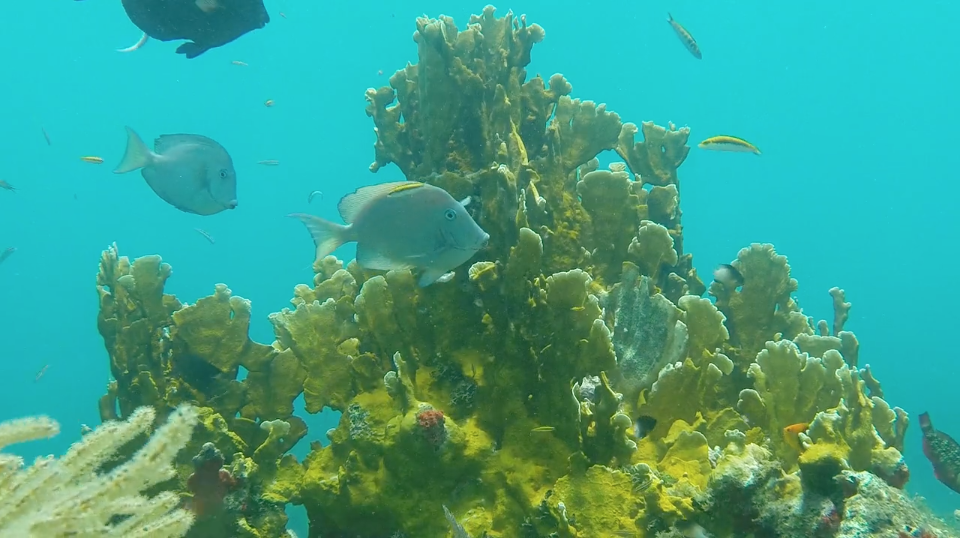
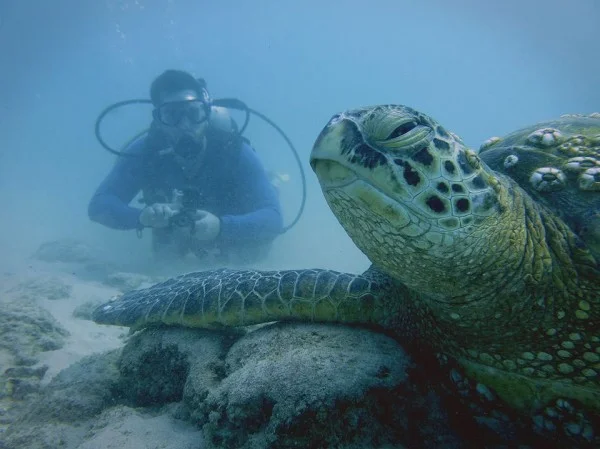
Running Wild Media spent several days scuba diving off the coast of Mozambique to capture the beauty of the coral reefs in the Indian Ocean and to continue the journey through Africa.
Where the hot dry African land meets the cool blue sea of the Indian Ocean, lies a little town called Ponta Do Ouro. This place exists in Mozambique but sits right on the border of South Africa. Getting here is not for the faint at heart and requires a lengthy border crossing process and a long off-road drive through sand dunes. Once there, visitors are rewarded with a bunch of restaurants and souvenir shops. The Running Wild Crew visited for something else entirely, diving the coral reefs.


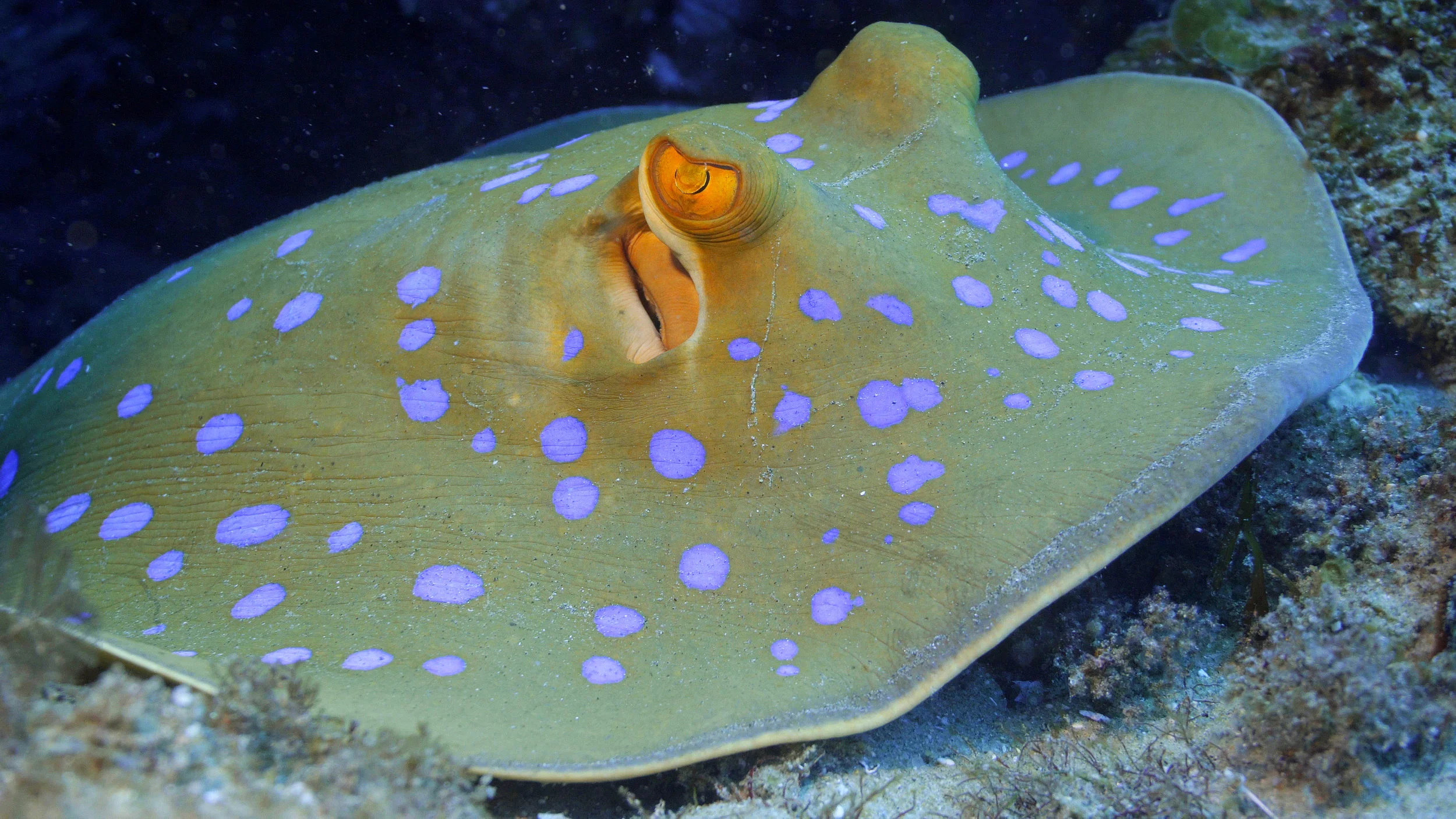
One of the most prevalent organisms, perhaps more prevalent then on other Running Wild trips, were the green sea turtles that continuously approached us as we were diving around the reefs. Other organisms were common as well such as stingrays, big grouper, schools of fish and dolphins. The deepest dive, which was completed by co-founder Justin Grubb, was 135 feet on the reef wall and had about 15 minutes of bottom time. On this dive, Justin encountered a hammerhead, which was the first time he has ever seen one in the wild.


Perhaps wilder then the reefs around Ponta Do Ouro, was the way the divers got to them. There were no docks in Ponta Do Ouro, so boats had to be pulled to the beach by tractors, the pushed into the water by the team of divers. In most cases, the boats were huge rubber zodiacs that held around 20 divers and had twin engines so pushing them in was no easy feat. Once the boat was pushed around to face the water, all 20 divers had to cooperate to push it into the surf as waves pushed the boat back to shore. Once overcoming the tide, the divers had to jump in, one by one and clamor around until they found their seat. Putting gear on while on these boats seemed even more difficult, with 20 people all moving around trying to get their gear on, finding any space to do so was nearly impossible. Once the dive was completed and the divers pulled themselves up nearly 4 feet out of the water back onto the boat, the next stage of the adventure just began. Once again, since there are no docks along the beach, the only way to get the boat were it needs to go, is to ride a wave coming in, then gun the engine to ramp off the wave and on to the beach with a boat full of people and divers. Instructions were clear, hold onto something, you didn't want to be the one flying off the boat as it was midair hurdling towards sand.


On assignment with Nat Geo Wild
Running Wild Media's Co-founders Alex Goetz and Justin Grubb went to South Africa for an assignment with Nat Geo Wild and spent a week with Safari Live.
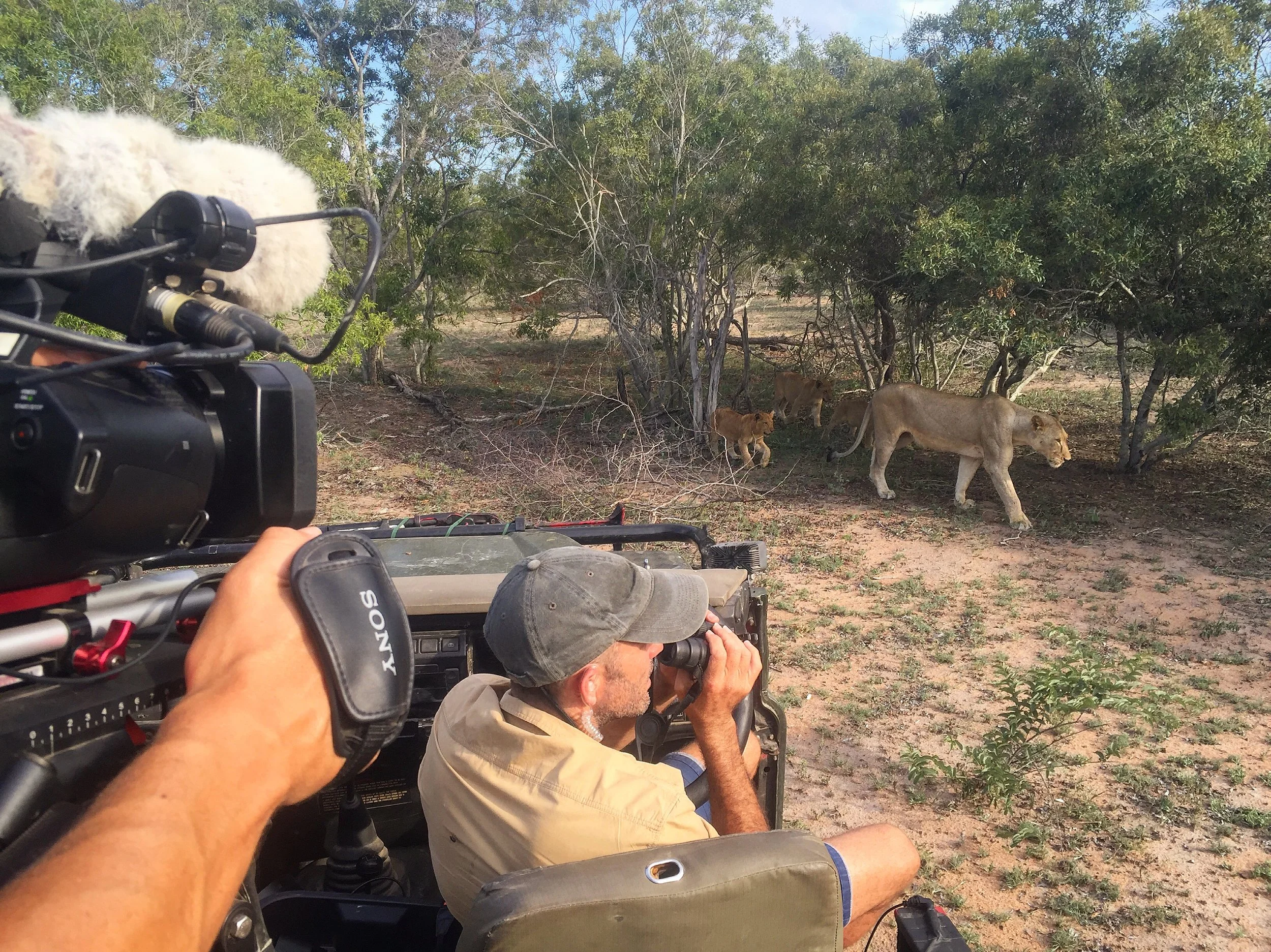
11/30/2016 - Running Wild's Co-Founders Alex Goetz and Justin Grubb Traveled to the Djuma Game Reserve in South Africa to film promotional material and behind the scenes of WildEarth's brainchild "Safari Live.' This show takes viewers on a live safari twice a day for four hours and is filmed entirely in the bush. Safari Live has a small group of wildlife presenters, cameramen and a whole team that runs the "mission control" center which allows the live broadcast of the show. While on assignment, Running Wild Media went on constant game drives looking for wildlife and spent eight days with the amazing WildEarth team.

"This ain't your average everyday safari." Justin Grubb joined Nat Geo Wild presenter James Hendry on a live broadcast and found himself surrounded by a pride of lions.
The time spent in Djuma was full of excitement and unforgettable memories. On the first day of arrival, Alex and Justin got to see elephants and white rhinos for their first time ever in the wild. "As we were driving through the bush, our guide thought he heard the squeak of a rhino baby, but as we turned the corner, there were two full grown males fighting with each other." While observing this rare behavior and noticing the battle scars left on the rhinos, Alex commented, "Stop don't you guys know you're endangered?" The trip had more heart stopping moments, like when a young bull elephant started sizing up the safari truck the crew was in and got too close for comfort for some people. The crew also got to witness a mother leopard named Karula drag a baby impala across the bush to her cub and watched as the cub pounced on and played with the body of the impala as if it were a giant furry cat toy. One of Justin's favorite moments is when, on a safari drive, there was a giant pile of fresh rhino dung on the ground covered in dung beetles. Justin wanted to film the beetles and asked to get out with the camera. The guide gave him permission and as Justin was about to leave the vehicle, two large white rhinos came out of the treeline just feet from the vehicle. "It is a damn good thing I wasn't out of the vehicle at the point, who knows how they would have reacted." Animals in popular safari spots are habituated to vehicles, but once a person leaves the vehicle, the animals typically react as if there is a predator on the loose.


Safari Live in an important show because it gives viewers the opportunity to experience a true safari from the African bush miles away in the comfort of their home. Not everyone can go on safari, but with the current benefits of technology, one can go on the next best thing, a virtual one. This generates an interest in the lives of the animals portrayed on the show by thousands of viewers and spreads awareness of the conservation issues facing this region. When people have a love for an animal or a species, they are more willing to act to protect it, even if it is half a world away. Another important lesson for viewers of Safari Live is that these animals are wild and are not taken care of by anybody. If a lion cub is dying, it does so with no intervention by humans, assuming the death is not caused by human intervention in the first place. Presenters admit, it is difficult to watch nature take its course, but it is a vital part of the evolution of life and what has made the Djuma Game Reserve such an amazing place.
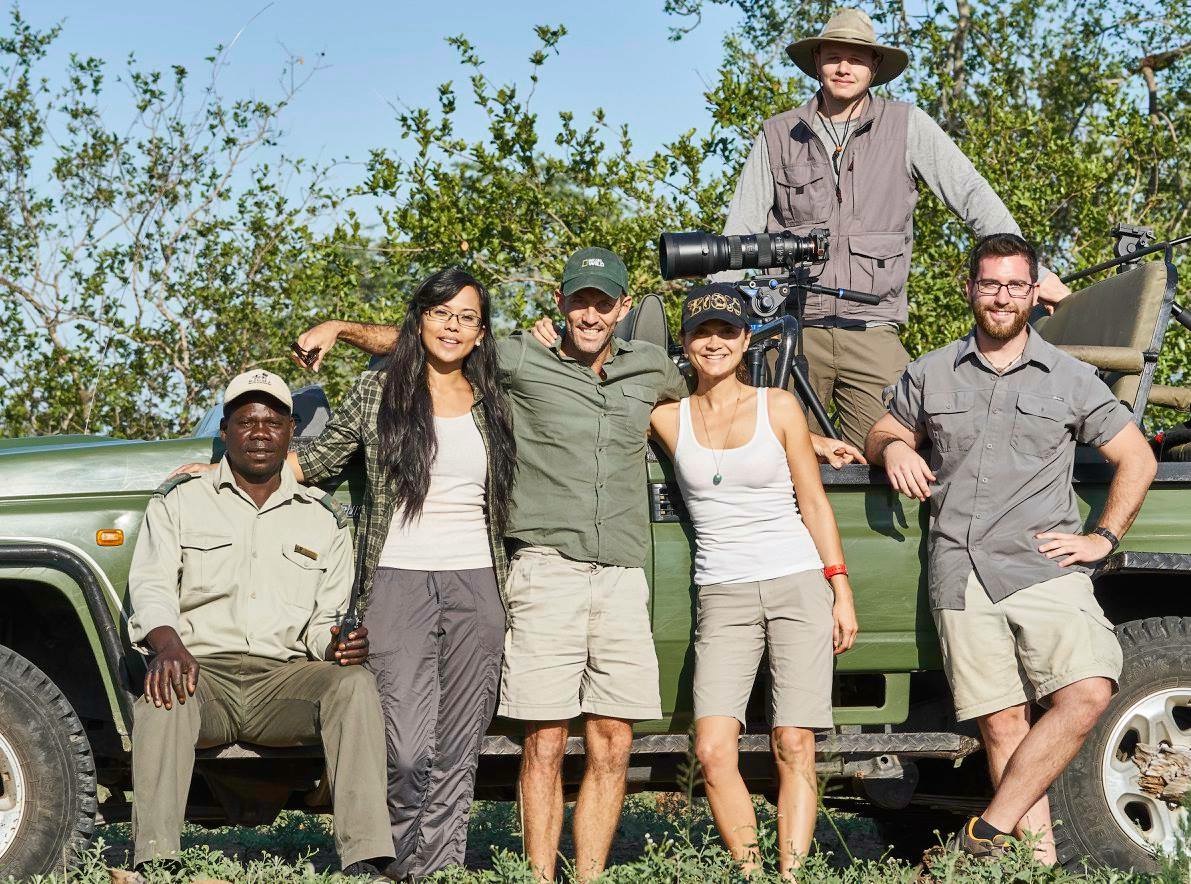
Photo by Niki Nilchian
With the conclusion of their assignment in South Africa, Goetz and Grubb will continue their journey in Africa and will head to Mozambique, Namibia and Botswana to continue filming wildlife.
Science Communicators Camp in Malibu
Co-founders Alex Goetz and Justin Grubb travel to the second annual Science Communicators Camp in Malibu California for a camp-style retreat with other science communicators
Co-founders Alex Goetz and Justin Grubb travel to the second annual Science Communicators Camp in Malibu California for a camp-style retreat with other science communicators from around the Country.
https://scicommcamp.wordpress.com
Science communication is a growing field that is vital, especially in the United States where so many misconceptions of science exist. The better science communicators work together to address misinformation and misunderstandings about science, the better informed the public will be when making choices like while voting for who will represent this country. As a media organization that specializes in conservation and communication, it has never been more important for us to dedicate our time to spreading scientific information. Running Wild Media will continue to build relationships within the science and science communicator community to be ready to inform the public on topics involving wildlife, conservation, sustainability and the environment.
Join us at next years Sci Comm Camp on October 13-15, 2017 in Malibu, California.
Filming Meso-American Reef in Honduras
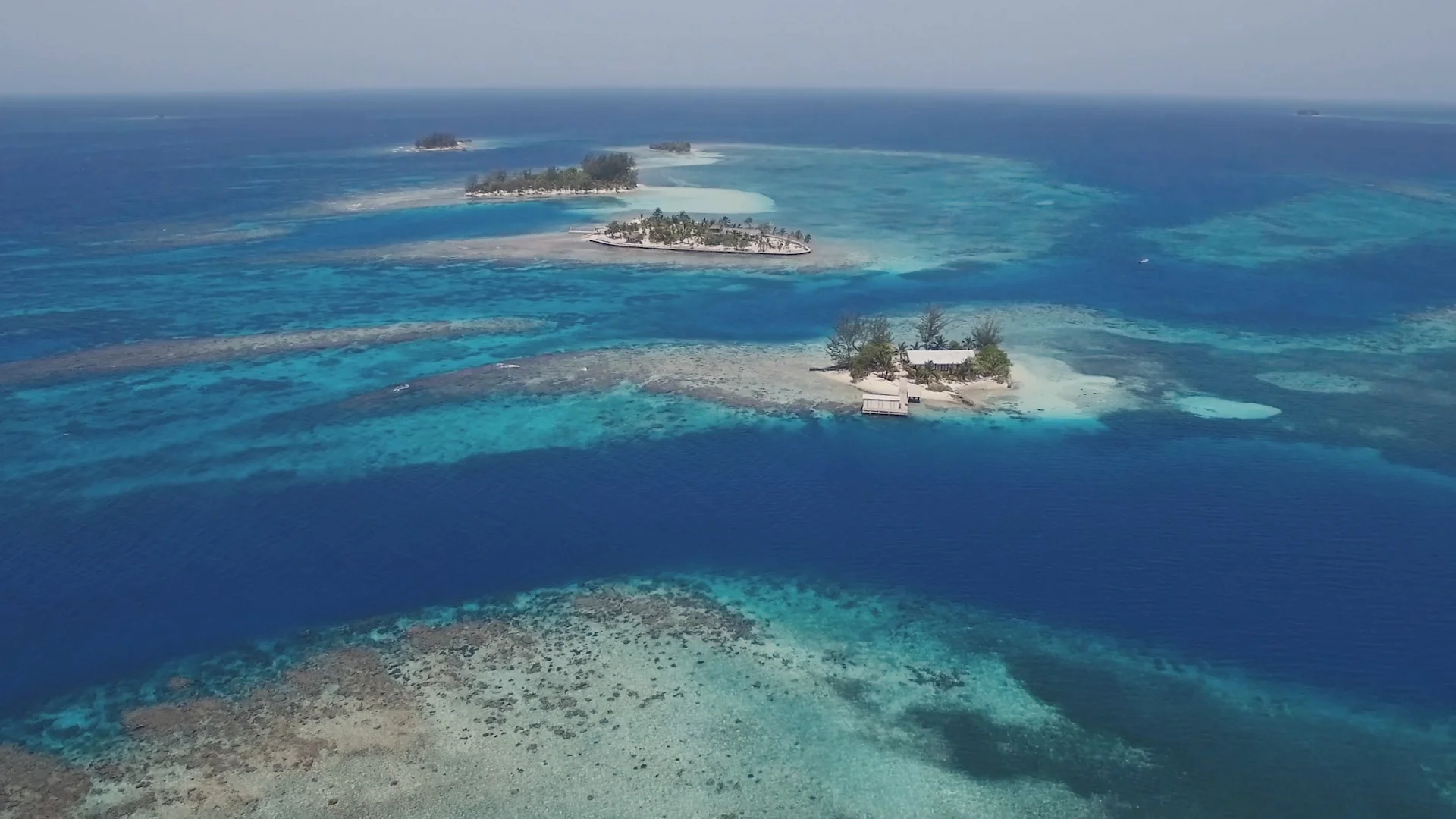
The Running Wild crew headed down to Honduras to film many conservation initiatives working around the second largest and oldest reef in the entire world.
The crew, joined by Kaelen Bell, Danielle Therrien and Kallie Stuckey visited Utila and Roatan Honduras to film the Whale Shark and Oceanic Research Center, Roatan Marine Park and the Shark Legacy Project.

Starting off on the beautiful island of Utila, the crew met up with the Whale Shark and Oceanic Research Center to talk about conservation and research regarding whale sharks, lionfish and coral reefs. While visiting, everyone got to see the new military drones carrying receivers employed by WSORC to pick audio signals from tags placed on whale sharks in the area. This allows researcher to see where the sharks are going and how often individuals appear around the islands of Honduras.
The crew also participated in a lionfish cull out of the reefs. Lionfish are invasive predators from the Indian and Pacific Ocean and are having adverse effects on the environment in the Caribbean because they lack natural predators and can eat dozens of reef fish a day. How the lionfish made it to these waters is a mystery, but in order to correct their appearance, scientists work to remove these fish through targeted fishing. WSORC partnered with Operation Wallacea and the University of Cambridge to research the diets of these lionfish in Honduras and the Running Wild crew got to dissect and work with these scientific organizations.


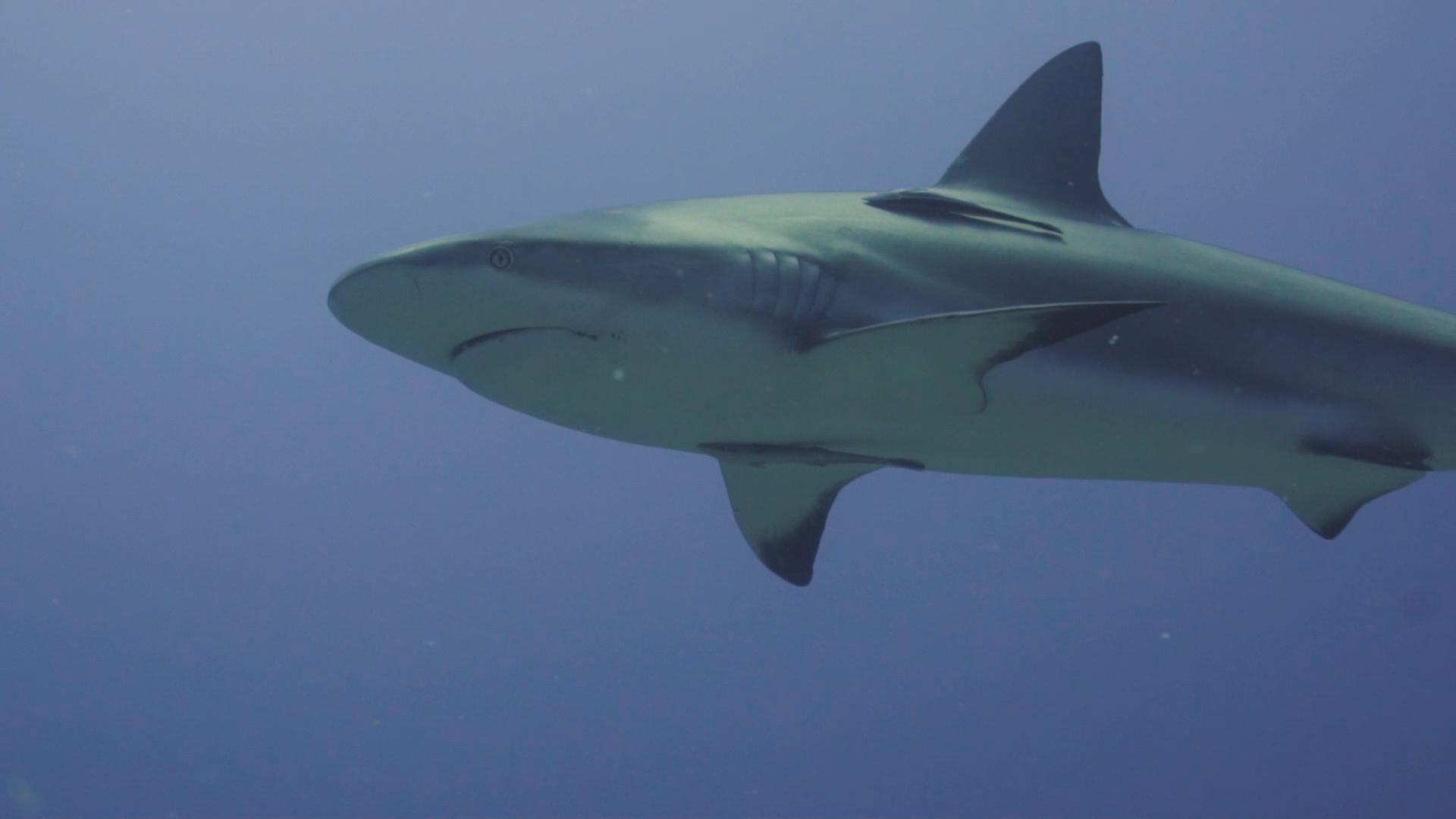
In addition, the crew met with the Shark Legacy project which was initiated to prove that sharks have more economic value through eco-tourism then they do shark fining. This was an effort to convince the government to protect the sharks rather then allow them to be hunted and removed from the Honduran reefs. Sharks are incredibly important to the ecosystem by regulating the food chain from the top down and controling fish that would otherwise damage the reef beyond repair. When swimming in these waters, it is scarier to not see sharks, then it is to see them.
Alex Goetz and Justin Grubb use the drone to get amazing shots of the reef from above. Only from a birds eye view is the geology behind the reef apparent.

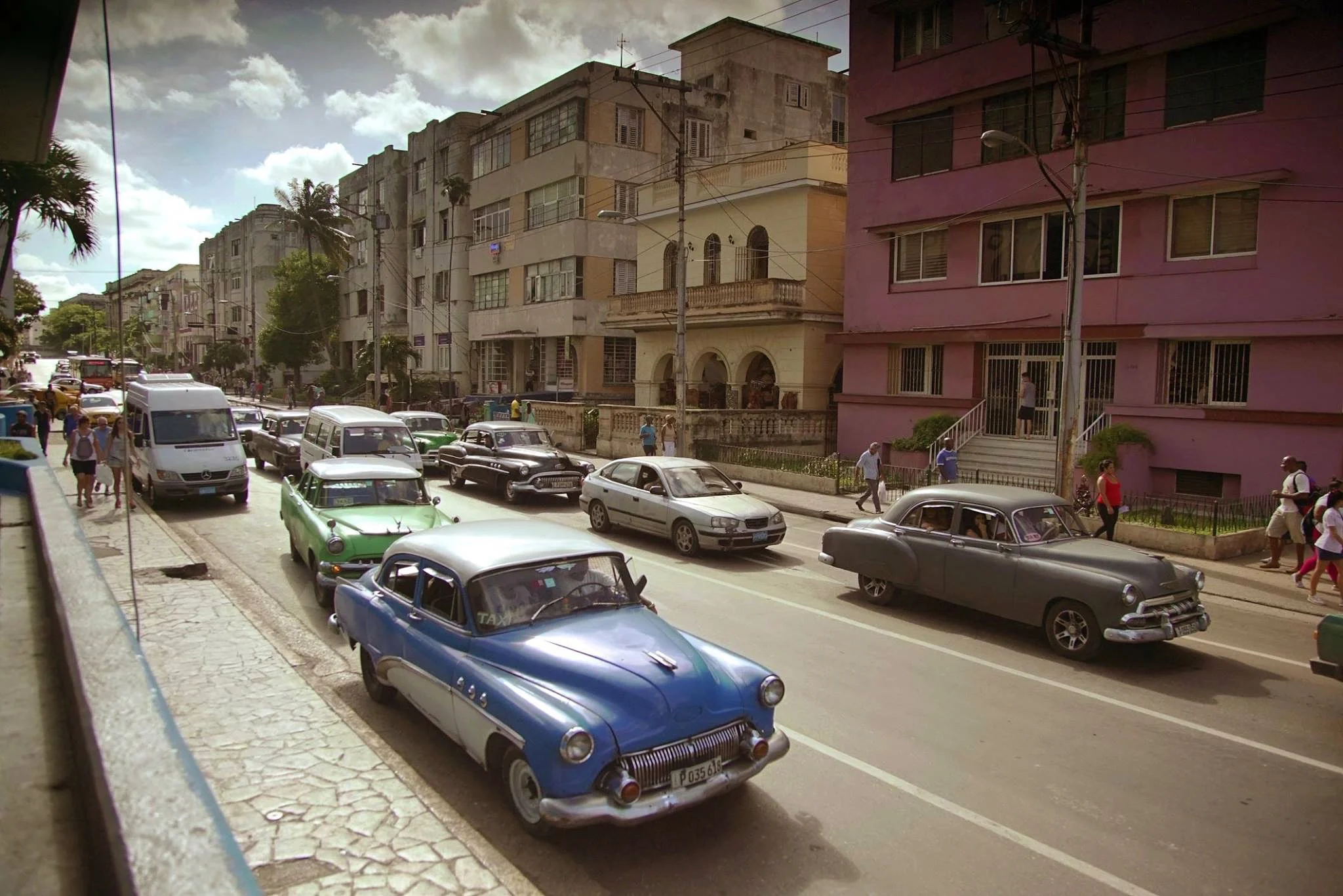
Co-Founder, Alex Goetz, in Havana, Cuba
Co-founder and Cinematographer, Alex Goetz, was hired to travel to Havana, Cuba to produce a piece about some of Havana's local artists.
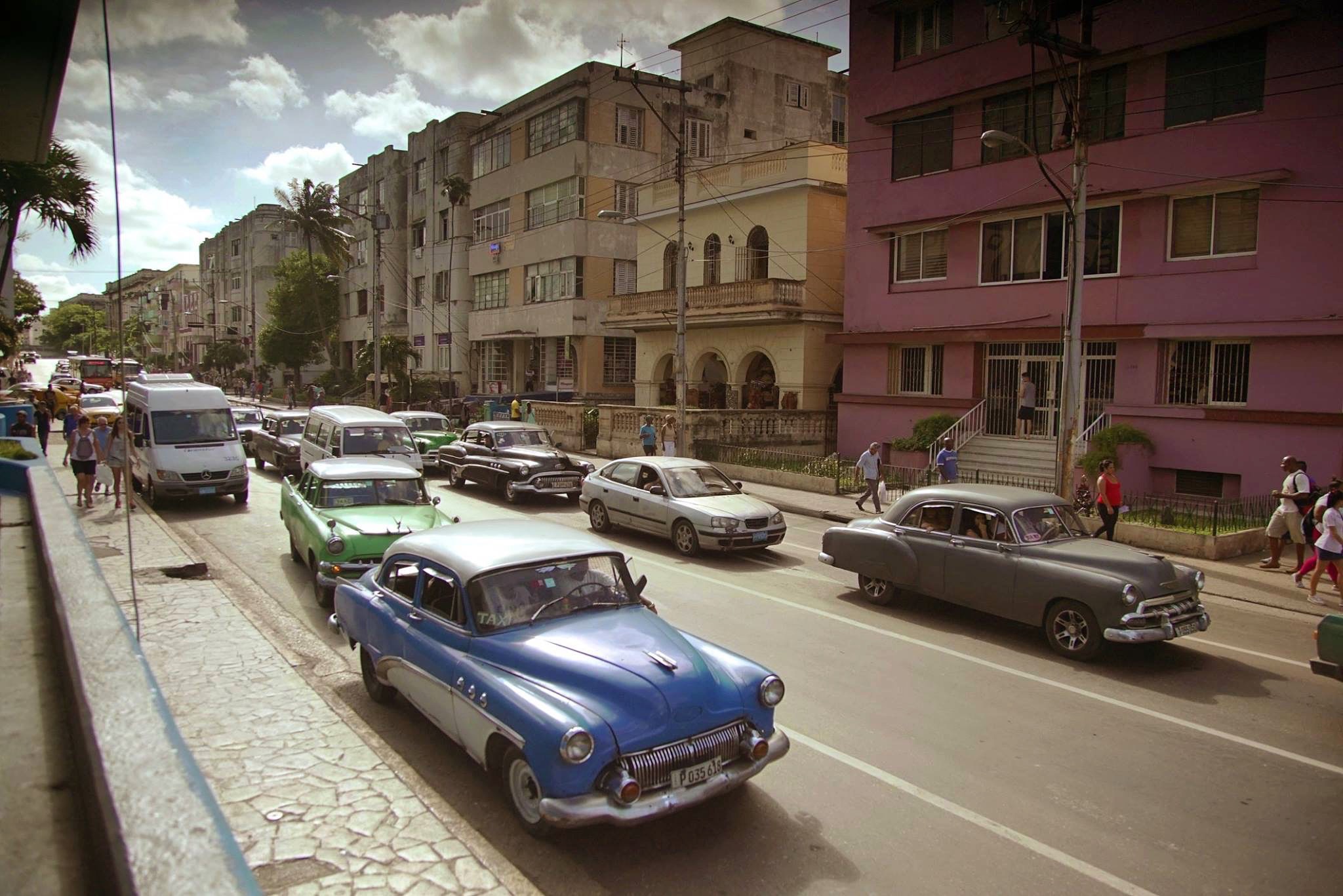
Our Co-founder and Cinematographer, Alex Goetz, was hired to travel to Havana, Cuba to produce a piece about some of Havana's local artists. Words can't even describe how excited Alex was to get to set foot in a country many American citizens haven't had the opportunity to see yet. Check back soon for photos, with a short teaser video of Havana soon as well!
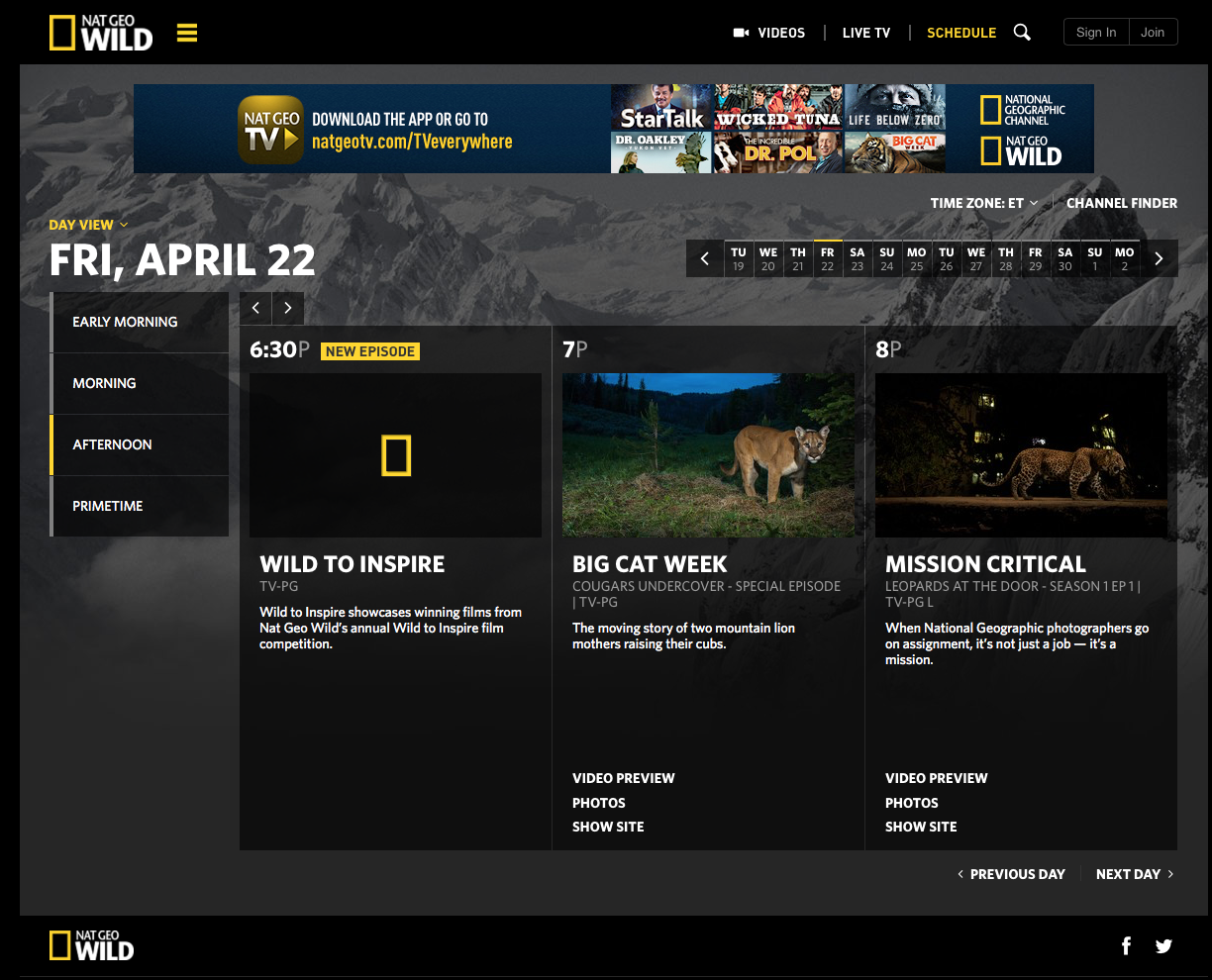
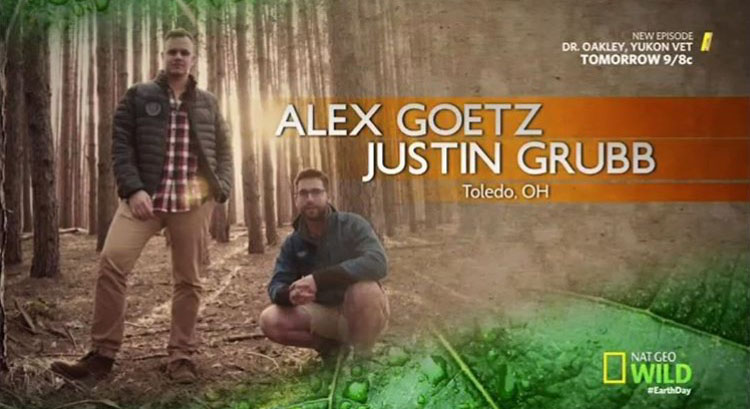
"To the Explorers," on NatGeo Wild tv April 22nd at 6:30pm!
Tune in to Nat Geo Wild on Earth Day to see the short film "To the Explorers" created by Running Wild Media and produced by the Toledo Zoo.
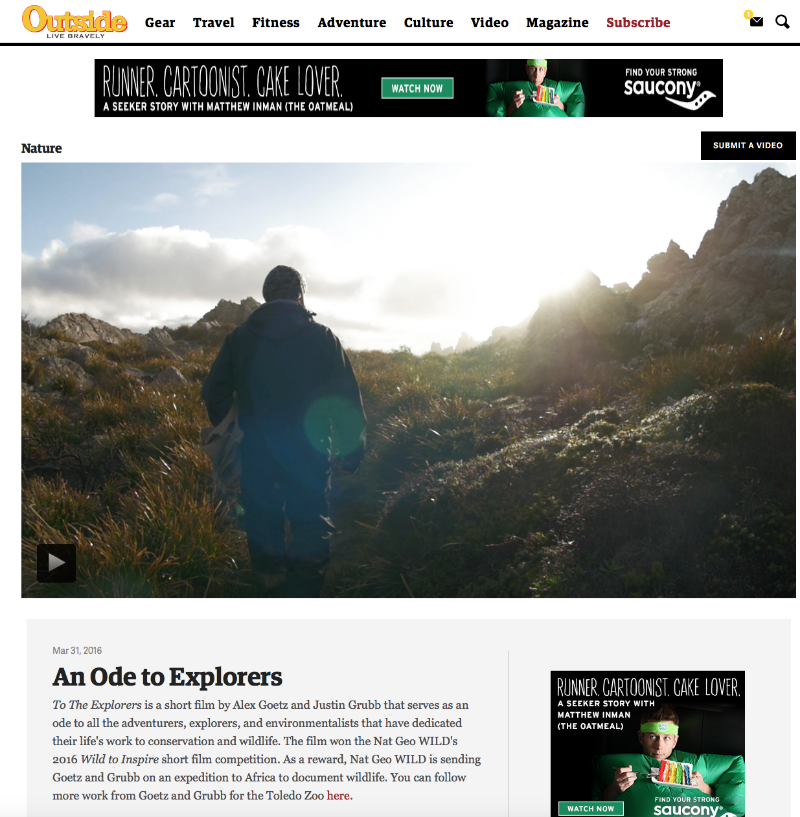
On April 22nd, Earth Day, Nat Geo Wild will be airing the 2016 "Wild to Inspire" film competitions finalist videos as well as the winner "To the Explorer" created by Running Wild Media. The result of this competition is that Co-founders Alex Goetz and Justin Grubb go on assignment in South Africa with Nat Geo Wild.
In Production!
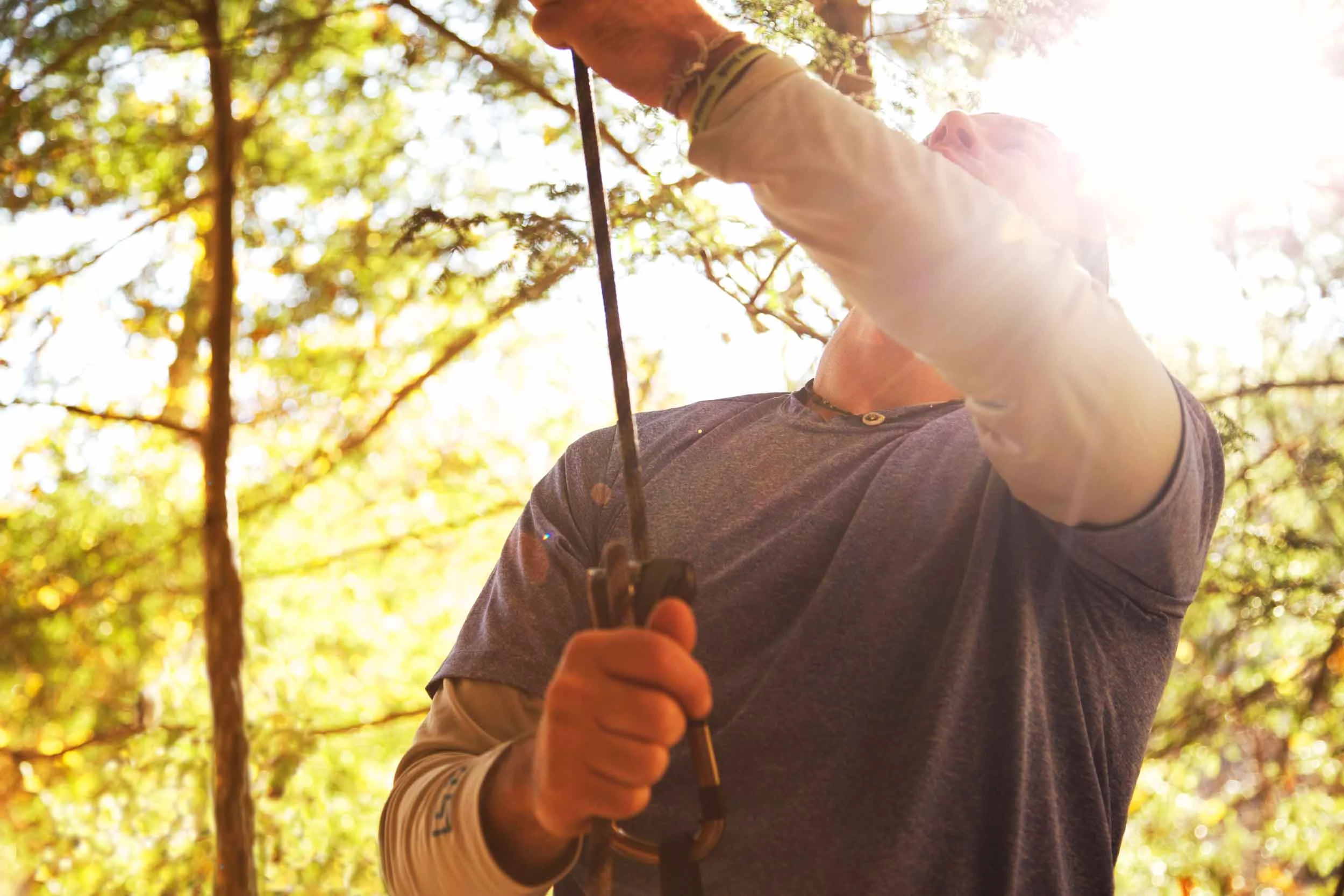
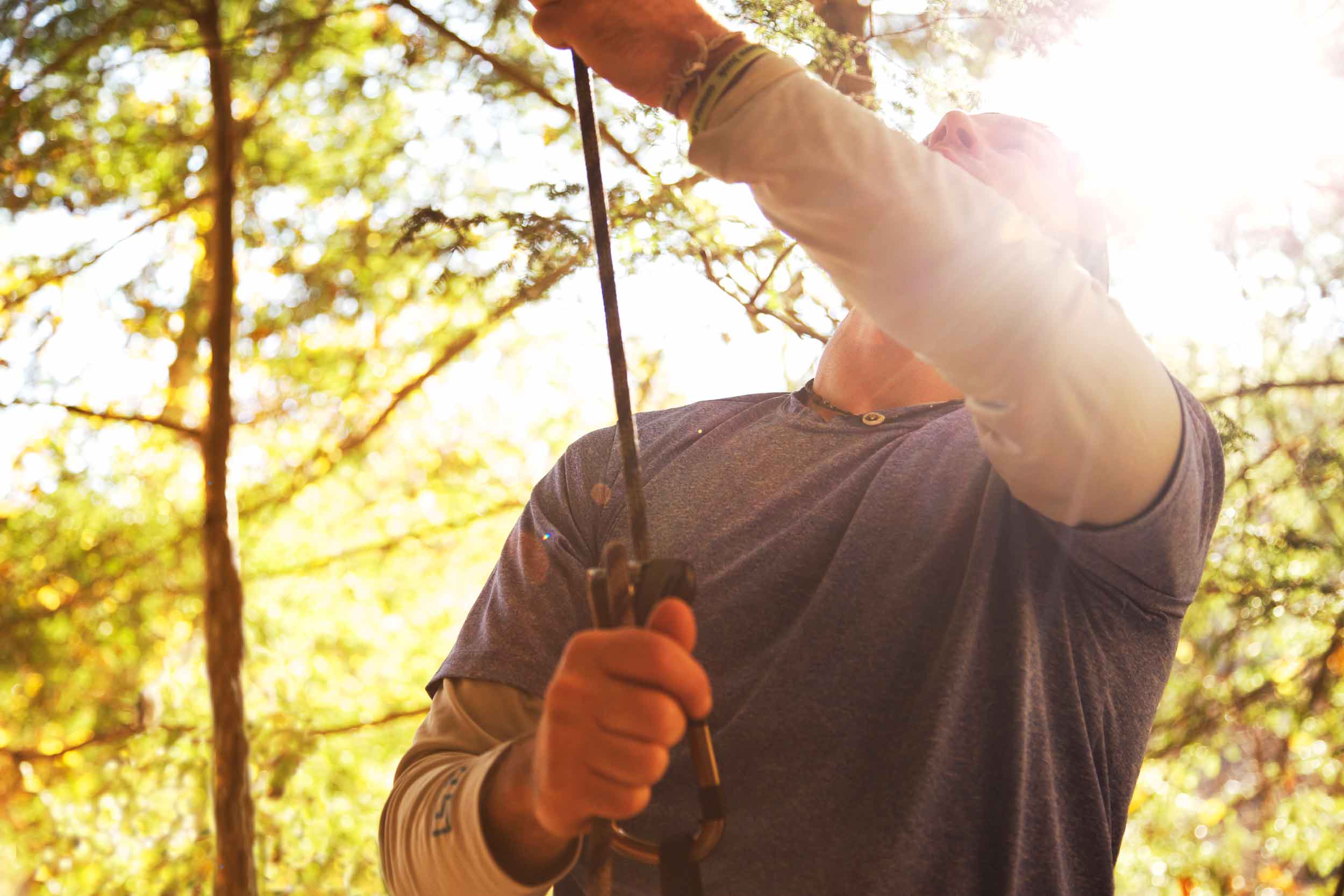
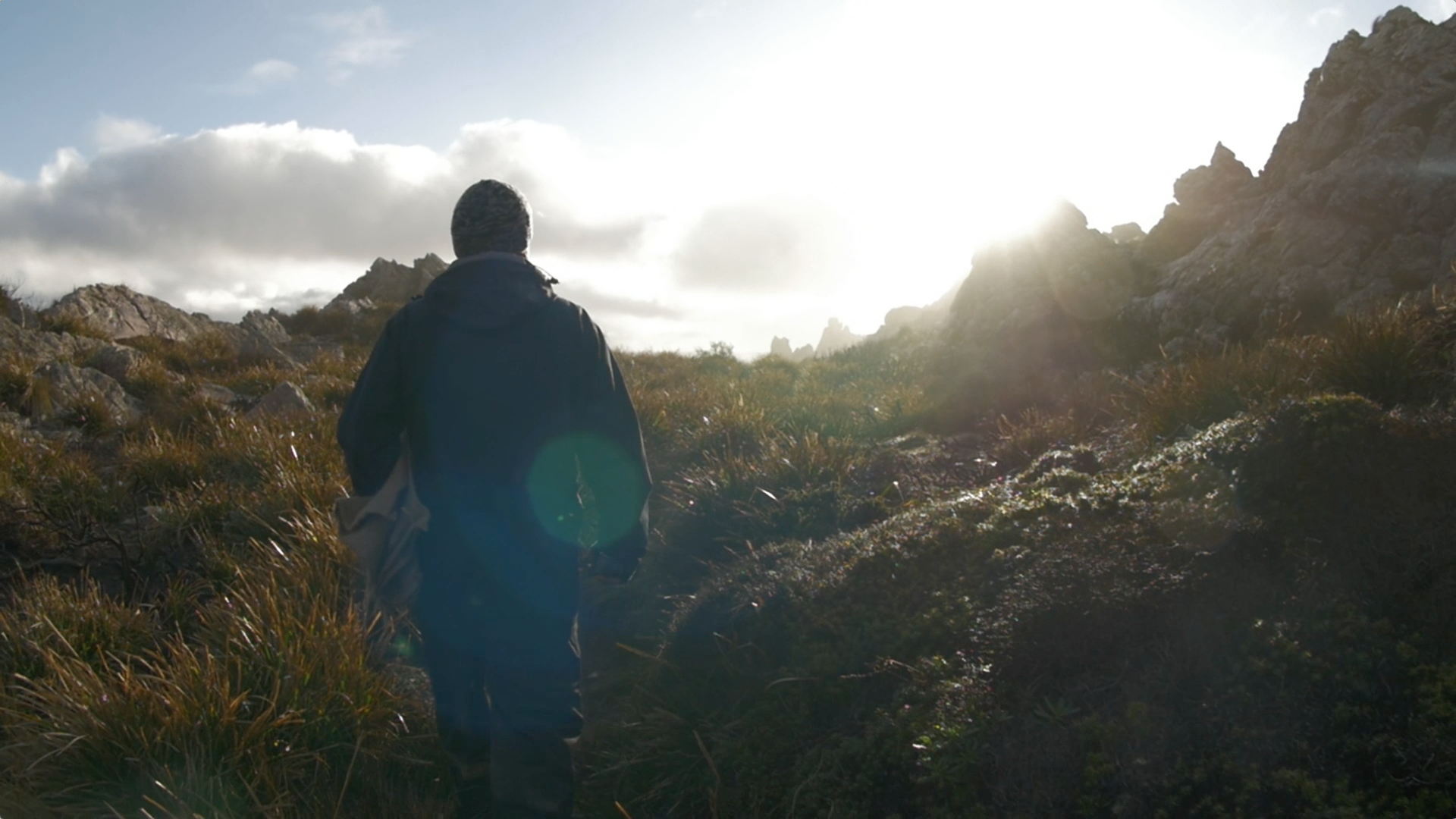
This weekend, April 15th, begins the production of a new documentary our team here at Running Wild will be producing. We are super excited to be working with such an amazing story, and upon completion hoping to take this film on an extensive film festival tour. We don't want to give away all the details, so we will throw some a hint out there in the photo below, and provide lots of BTS photo/video from this weekend starting next week, to get everyone as hyped up as we are!


Earth Touch: The Wild Life (EP 18): Wildlife Filmmakers Justin Grubb & Alex Goetz
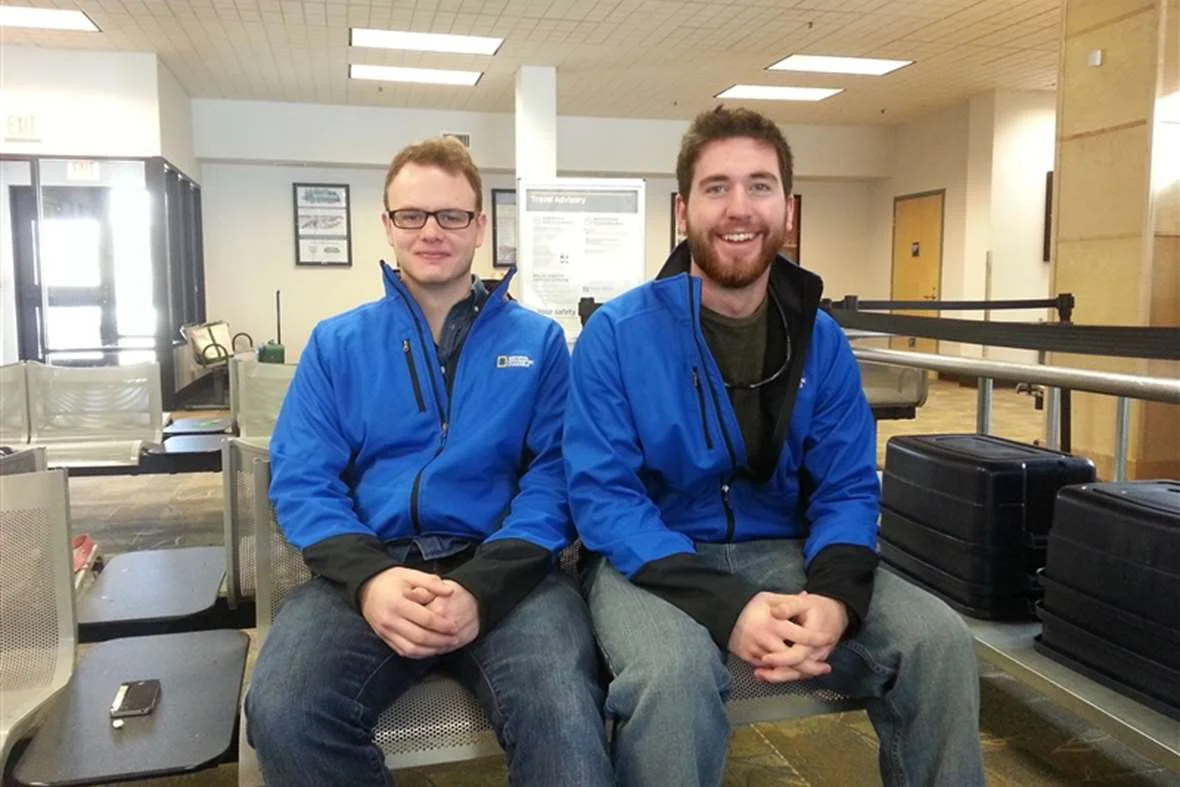
'The Wild Life' is coming at you this week from snowy Sun Valley in Idaho! Wildlife filmmakers Justin Grubb and Alex Goetz are finalists in Nat Geo WILD's 'Wild to Inspire' film competition, which is part of the Sun Valley Film Festival. They talk with Jason about wildlife filmmaking in Central America, how films can be used to inspire conservation and more. Follow Justin and Alex on Twitter: @RunningWildTV.